FIX Partner × NexaCore: ERP Solutions for Business Growth
FIX Partner and NexaCore collaborate on ERP solutions to streamline business operations, connect processes, and support sustainable growth.
As businesses grow, managing daily operations becomes increasingly complex. Disconnected systems, manual processes, and limited access to reliable information can slow productivity and make decision-making more difficult.
On this page
To address these challenges, FIX Partner and NexaCore are collaborating on ERP solutions and implementation to help businesses streamline operations, connect processes, and build a foundation for sustainable growth.
This collaboration reflects a shared focus on using technology to improve business efficiency and support long-term objectives. With the right ERP approach, organizations can create more integrated workflows and adapt more effectively as their needs evolve.
Why Digital Transformation Matters for Modern Businesses
Digital transformation is about more than adopting new technology. It involves improving how a business operates, makes decisions, and creates value. As organizations expand, reviewing existing processes becomes essential to maintaining efficiency and competitiveness.
Many businesses still rely on spreadsheets, manual tasks, and separate software systems. Although these methods may work initially, they can become difficult to manage as operations grow.
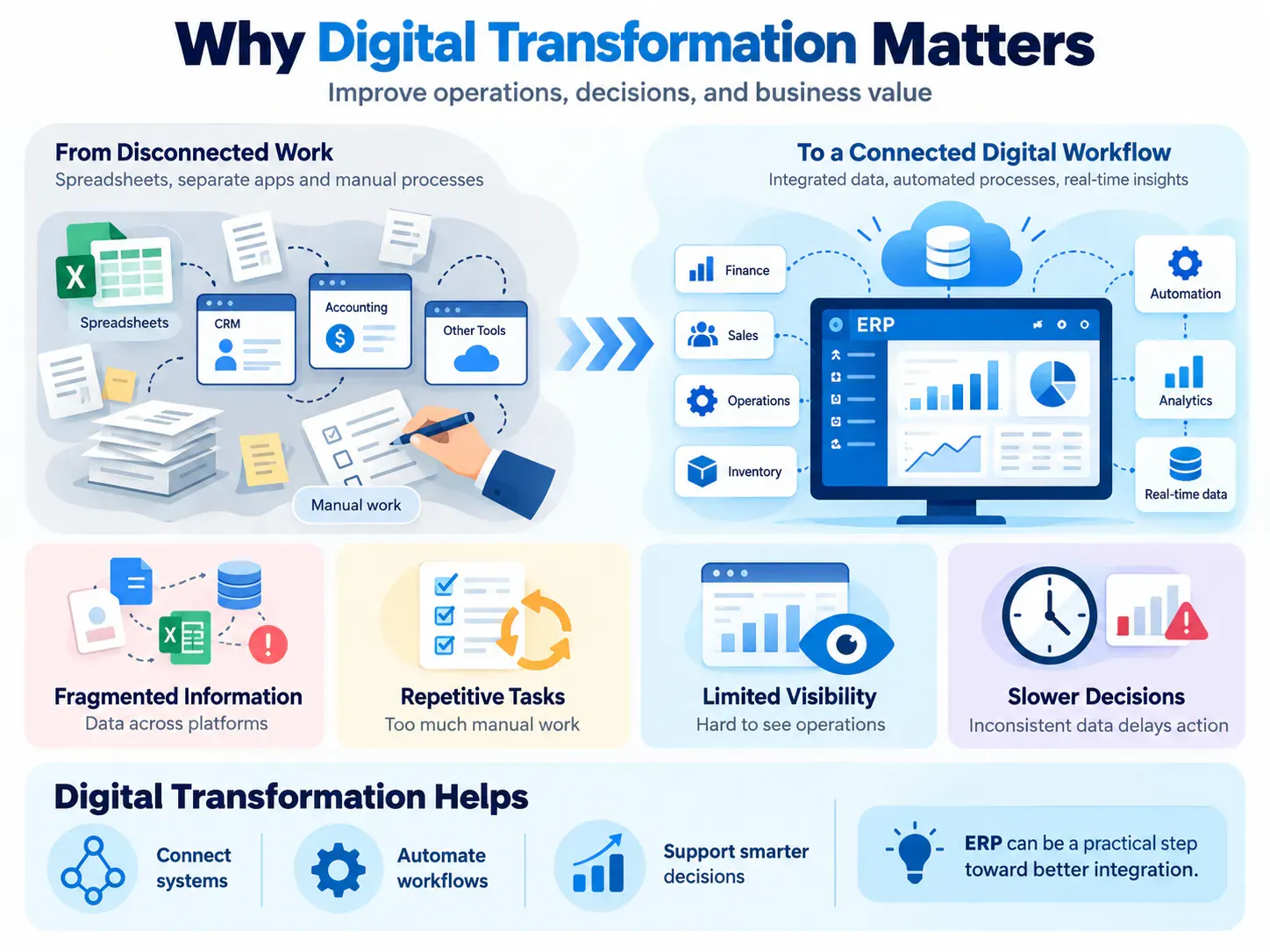
Overcoming Disconnected Processes
When departments manage information independently, employees may spend too much time collecting data, checking records, and updating multiple systems.
Common challenges include:
- Fragmented information: Data is scattered across different platforms.
- Repetitive tasks: Manual work consumes time and resources.
- Limited visibility: Managers struggle to access timely operational information.
- Slower decisions: Inconsistent data makes it harder to identify issues and opportunities.
These challenges can increase costs and reduce collaboration. Digital transformation helps businesses review existing workflows and identify where technology can deliver practical improvements. For organizations seeking better integration, Enterprise Resource Planning (ERP) solutions can be an important step forward.
How ERP Solutions Help Businesses Work Smarter
ERP systems help businesses manage and connect key activities through an integrated platform. Depending on the implementation scope, these activities may include finance, purchasing, inventory, sales, and production.
By connecting information and workflows, ERP solutions can reduce reliance on disconnected tools and help teams operate more efficiently.
Connecting Processes and Improving Decisions
When departments work with consistent information, they can coordinate activities more effectively and reduce unnecessary manual work. For example, changes in sales demand may affect inventory, purchasing, and financial planning. An integrated system helps relevant information flow between connected functions.
ERP solutions can support businesses through:
- Streamlined workflows: Reduce repetitive tasks and standardize routine processes.
- Improved data consistency: Make information easier to maintain and share.
- Better collaboration: Help departments coordinate their activities.
- Resource optimization: Support planning for inventory, budgets, and other resources.
ERP solutions can also improve operational visibility. With more accessible business information, managers can monitor performance, identify potential problems, and make informed decisions.
However, technology alone does not guarantee success. Businesses also need clear objectives, reliable data, and employees who understand how to use the system effectively.
Supporting Scalable Growth
As businesses enter new markets or expand operations, existing processes may no longer suffice. An ERP approach aligned with long-term business needs can help organizations manage increasing complexity and adapt to changing requirements.
The key is to consider not only immediate improvements but also future integration needs, process changes, and opportunities for expansion.
FIX Partner × NexaCore: Working Together Toward Business Growth
The collaboration between FIX Partner and NexaCore focuses on ERP solutions and implementation that help businesses streamline operations, connect processes, and support sustainable growth.
Successful ERP adoption involves more than selecting software. Businesses need to understand their operational challenges, define clear priorities, and consider how technology will support everyday work.
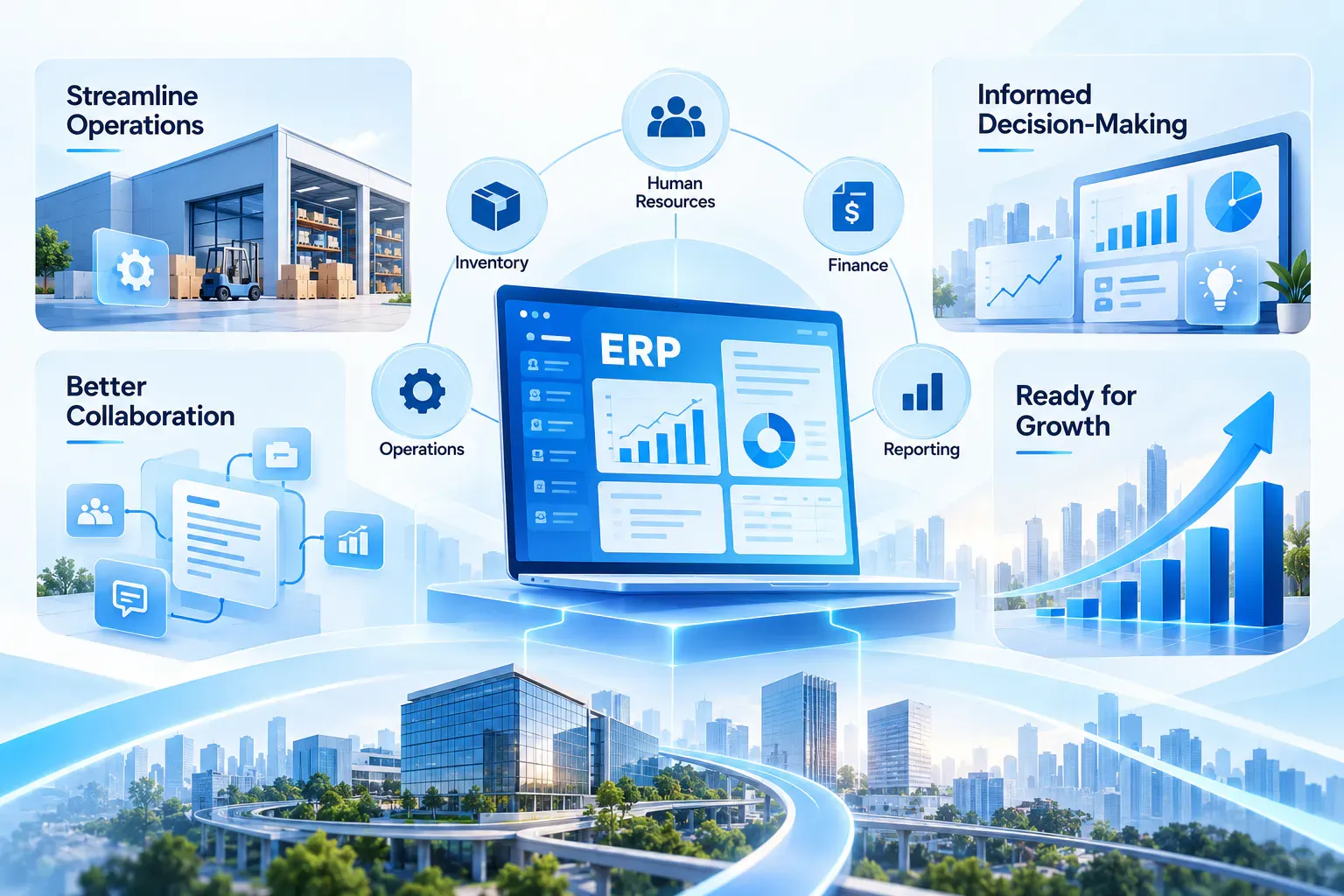
Focusing on Practical Business Outcomes
Every organization has different requirements. Some may prioritize inventory management, while others need better reporting or more efficient coordination across departments.
An effective ERP approach should align with these specific objectives. Potential areas of improvement include:
- Simplifying complex business processes.
- Improving information sharing across departments.
- Supporting informed decision-making.
- Preparing operations for future expansion.
By keeping business outcomes at the center of digital transformation, organizations can focus on technology improvements that address real needs rather than adopting systems simply for their features.
Building Long-Term Value
ERP implementation should not be treated as a one-time technology project. Its value depends on whether the system continues to support business needs after deployment.
Organizations may need to refine workflows, improve data quality, provide employee training, and review system performance as requirements evolve.
Through their collaboration, FIX Partner and NexaCore aim to support businesses in building more connected operations and establishing a stronger foundation for growth.
Turning Digital Transformation into Lasting Business Value
Achieving meaningful results from ERP solutions requires preparation, collaboration, and continuous improvement. Businesses should connect implementation decisions with clear operational goals and regularly evaluate progress.
Start with Business Needs
Before implementing an ERP solution, organizations should identify their most important challenges and define the outcomes they want to achieve.
A practical starting point includes:
- Assessing current processes: Identify bottlenecks, repetitive tasks, and information gaps.
- Setting clear priorities: Determine which improvements matter most.
- Planning for growth: Consider system integration and future business requirements.
This preparation helps businesses establish a realistic implementation scope and choose an approach aligned with their objectives.
Support Employees and Measure Results
Employees need to understand how new systems affect their work. Appropriate training, clear communication, and opportunities to provide feedback can support adoption and help teams adapt to new workflows.
Businesses should also evaluate results using relevant indicators, such as:
- Time required to complete key processes.
- Frequency of data-entry errors.
- Time needed to prepare reports.
- Inventory accuracy and resource utilization.
Regular reviews help organizations identify areas for improvement and ensure their ERP solutions continue to meet evolving needs.
Moving Forward with FIX Partner and NexaCore
As businesses navigate increasingly complex operating environments, connected systems and thoughtful digital transformation can help improve efficiency and prepare organizations for future opportunities.
The collaboration between FIX Partner and NexaCore represents a shared commitment to ERP solutions and implementation that support streamlined operations, connected processes, and scalable growth.
Looking to improve your business operations through technology? Connect with FIX Partner to explore solutions aligned with your business goals.
Published by
FIX Partner
FIX Partner helps organizations design, build, test, and modernize software products with engineering, AI, data, and QA expertise.
About FIX Partner →Ask FIX Partner
Have a question about this topic?
Leave your details and a short note. Our team can help you identify a practical next step.
Related articles
How System Integrators Are Evolving into Super Intelligence
Hannah HuynhOct 2, 2026
Discover how the shift from System Integrator to Super Intelligence can improve business efficiency, decisions, customer experience, and growth.
Read more →
H-1B Visa Costs and Offshore Software Development
Hannah HuynhOct 10, 2026
Explore offshore software development cost strategies to optimize IT budgets, access skilled talent in Vietnam, and improve delivery quality with FIX Partner.
Read more →
Why Human Resource Software Matters for Business Growth
Hannah HuynhOct 9, 2026
Discover how human resource software helps businesses streamline HR processes, improve workforce decisions, and support sustainable business growth.
Read more →