SEO, AIO, AEO & GEO: Search in the AI Era
SEO, AIO, AEO, and GEO are reshaping search in the AI era. Learn how businesses can build websites ready for modern search and AI-powered visibility.
Search is changing rapidly. People no longer rely only on Google's traditional list of blue links to find information, compare providers, or make purchasing decisions. Increasingly, they ask AI-powered platforms for direct answers, recommendations, comparisons, and summaries.
This shift has introduced several terms businesses need to understand: SEO, AIO, AEO, and GEO. While these concepts overlap, each represents a different aspect of modern search visibility.
For businesses, the goal is not to choose one over another. Instead, companies need a digital foundation that works across traditional search engines and emerging AI-powered search experiences.
That foundation starts with the website.
A modern business website should do more than look professional. It should make the company's services, expertise, content, and value proposition easy for both people and search systems to understand.
By considering SEO, AIO, AEO, and GEO during website development, businesses can create a stronger digital presence that is prepared for how search continues to evolve.
SEO: The Foundation of Search Visibility
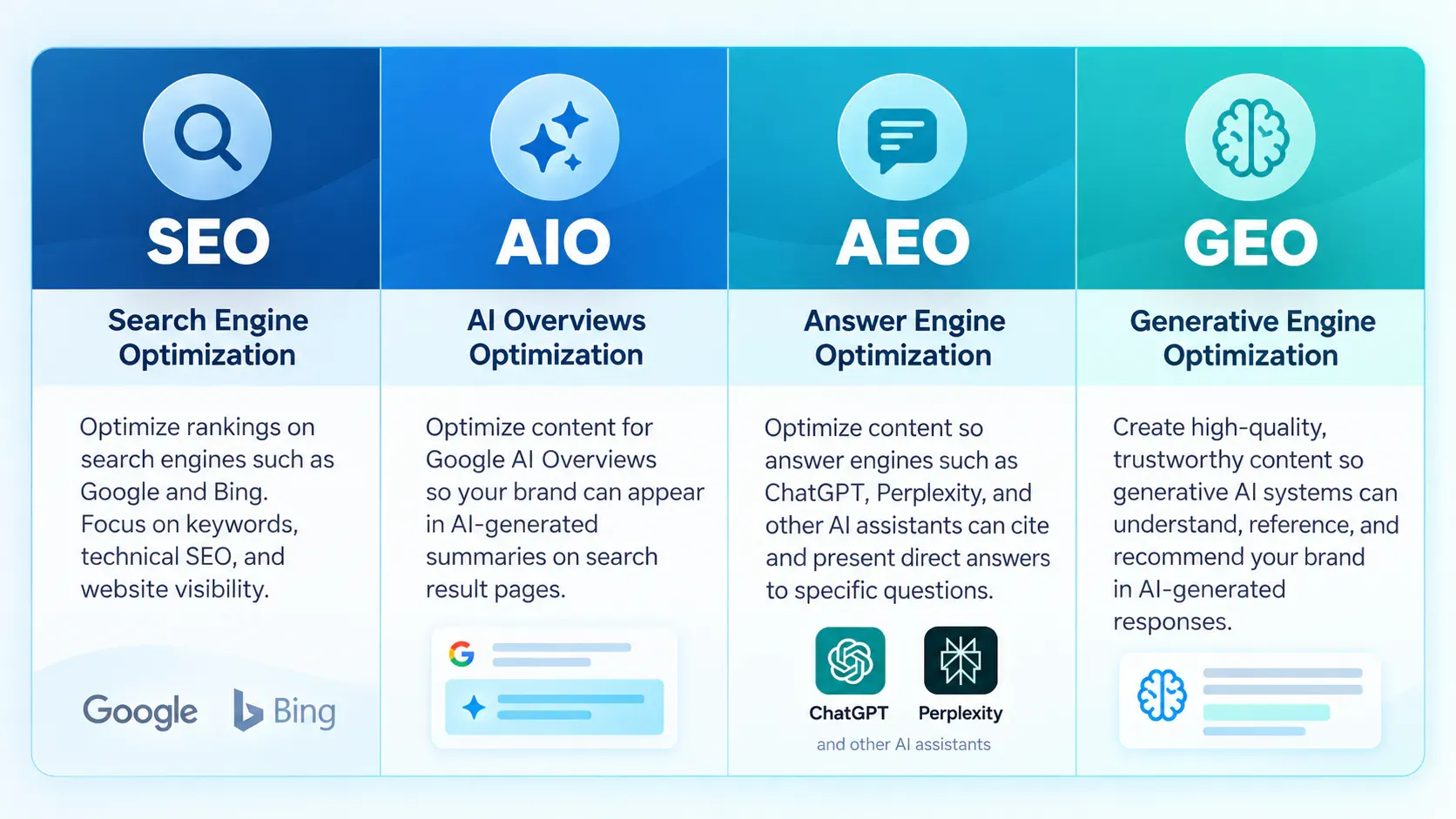
Search Engine Optimization (SEO) is the process of improving a website so search engines such as Google and Bing can understand its content and show relevant pages to users.
For businesses, SEO is about more than ranking for a handful of keywords. It helps potential customers discover a company's products, services, expertise, and resources when they are actively searching for solutions.
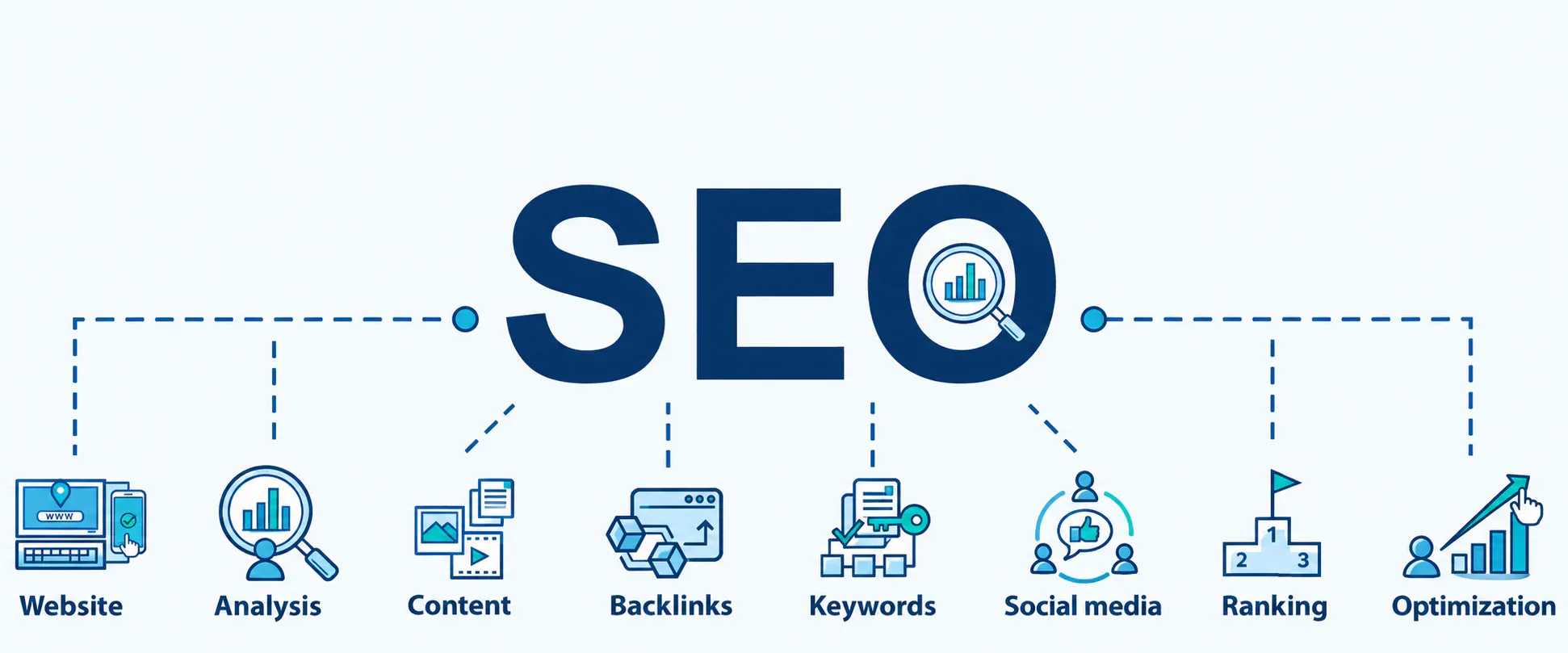
Effective SEO typically includes several areas:
- Technical SEO: Website performance, mobile usability, crawlability, indexing, and technical structure.
- On-page SEO: Page titles, headings, URLs, keywords, internal links, and content organization.
- Content quality: Useful, accurate, relevant, and original information.
- Authority: Credibility supported by reputable references, links, mentions, and demonstrated expertise.
- User experience: Making information easy to find, understand, and act on.
These requirements should be considered during website development rather than added after launch.
A logical site structure, fast performance, accessible pages, and scalable content architecture give businesses a stronger foundation for organic search visibility and for the AI-driven search experiences that increasingly build on traditional search.
AIO: Visibility in Google's AI Overviews
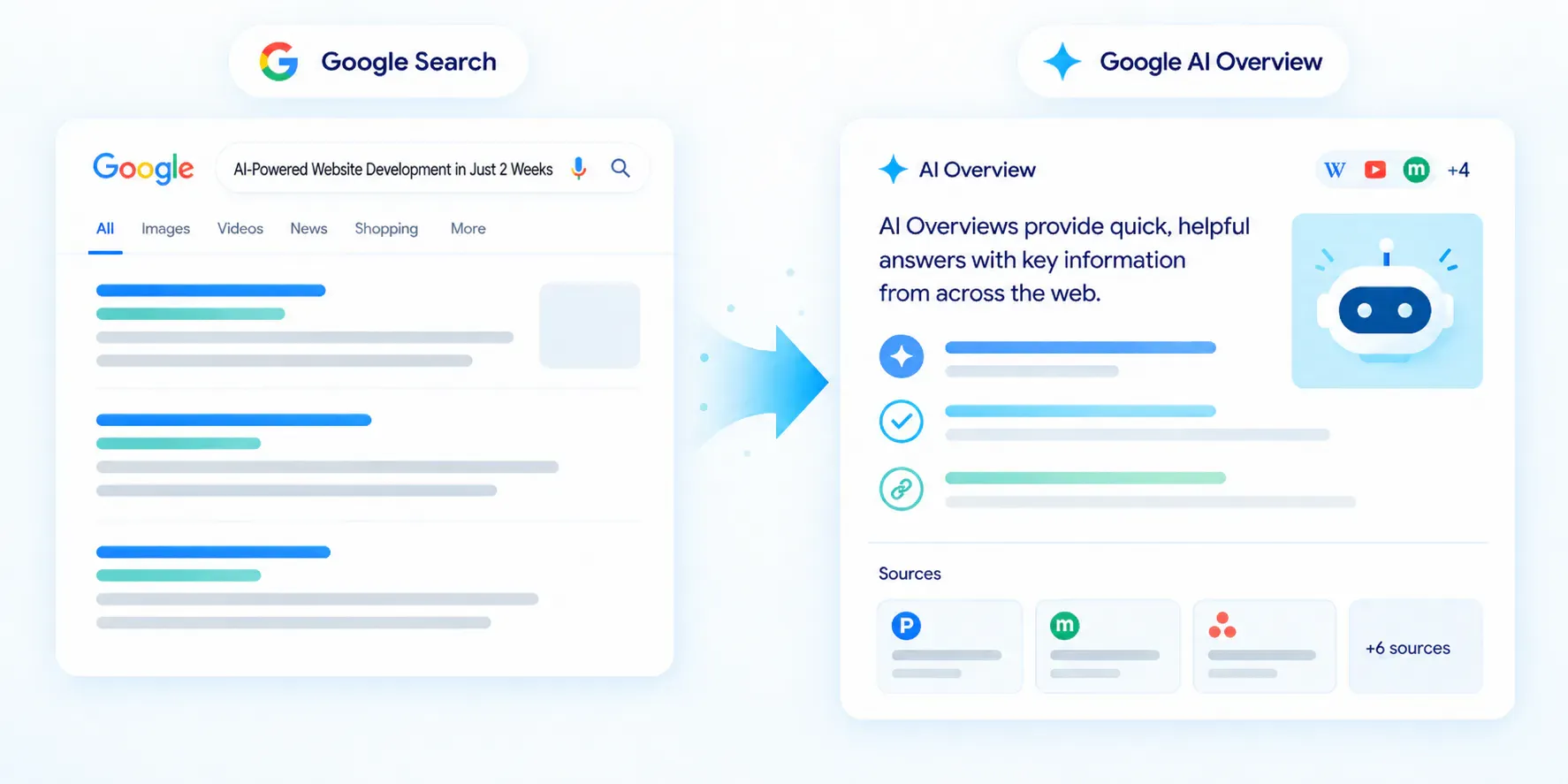
AI Overviews (AIO) refers to Google's AI-generated summaries that can appear in search results. Instead of requiring users to visit several websites, Google may provide a summarized answer based on information from multiple sources.
This changes how businesses should think about search visibility.
Traditional SEO often focuses on getting a page to rank highly for a specific query. With AI Overviews, another opportunity is becoming one of the sources that Google's systems consider when generating an answer.
For example, someone researching how to select a software development partner may receive an AI-generated overview covering factors such as expertise, cost, technology capabilities, and project experience. A company's website needs to communicate these areas clearly if it wants its information to be understood and potentially referenced.
There is no guaranteed formula for appearing in AI Overviews. However, businesses can strengthen their foundation by providing:
- Clear and well-organized information
- Descriptive headings and page structures
- Detailed service and solution pages
- Helpful answers to relevant customer questions
- Accessible and technically sound web pages
- Consistent information about the company and its expertise
In this sense, AIO is not a replacement for SEO. It is part of a broader search environment in which understanding and relevance are becoming as important as rankings.
AEO: Making Content Easy to Use as an Answer
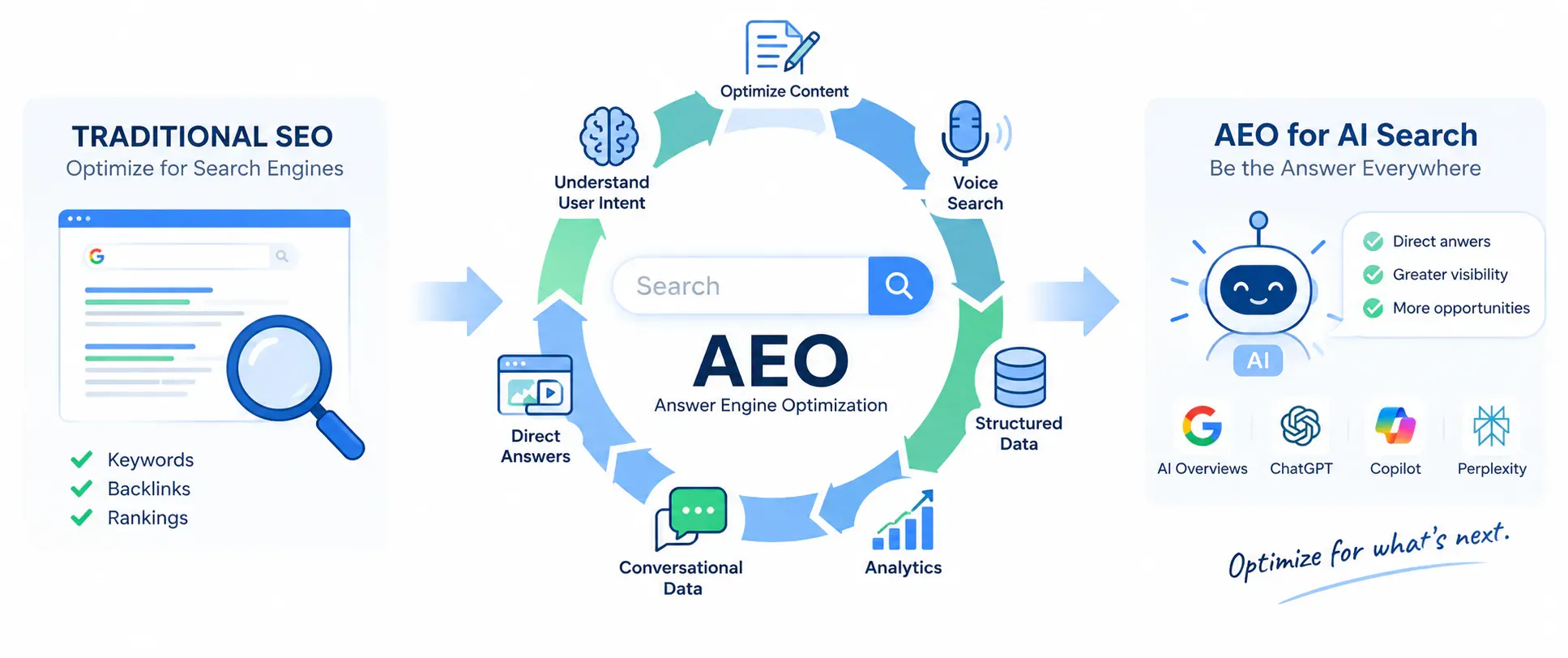
Answer Engine Optimization (AEO) focuses on making website information clear and useful for systems designed to provide direct answers to user questions.
Instead of only targeting broad keywords, AEO encourages businesses to address the specific questions customers ask throughout the buying journey.
For example, a professional services company could answer questions such as:
- What does this service include?
- How does the implementation process work?
- How long does it typically take?
- What factors affect the cost?
- What problems does the service solve?
- How should a company choose a provider?
This approach benefits both users and search systems.
Useful AEO content can include FAQs, definitions, how-to guides, comparisons, service explanations, industry insights, and educational resources.
The key principle is simple: answer the customer's question clearly and directly before trying to optimize the content for search.
A website that provides complete and well-structured answers creates a richer information environment for both traditional search and AI-powered answer experiences.
GEO: Building Visibility Across Generative Search
Generative Engine Optimization (GEO) takes the concept of search visibility further by considering how a brand may appear in AI-generated responses across platforms such as ChatGPT, Perplexity, Gemini, Copilot, and other generative search experiences.
GEO is not simply about adding more keywords to a website.
AI systems need clear context to understand a company's services, expertise, and industry. An AI-ready data foundation helps support the depth, consistency, and credibility needed for AI-driven search and generative experiences.
A GEO-oriented content strategy may include:
- Detailed service and solution pages
- Industry-specific content
- Expert educational resources
- Comprehensive answers to customer questions
- Consistent company and service information
- Reputable external mentions and references
- Content that demonstrates genuine subject-matter expertise
The distinction between AEO and GEO can be summarized simply:
AEO focuses on making information useful and accessible for answer-oriented experiences, while GEO takes a broader view of brand visibility within generative AI environments.
In practice, businesses do not need completely separate AEO and GEO strategies. A strong content and website foundation can support both.
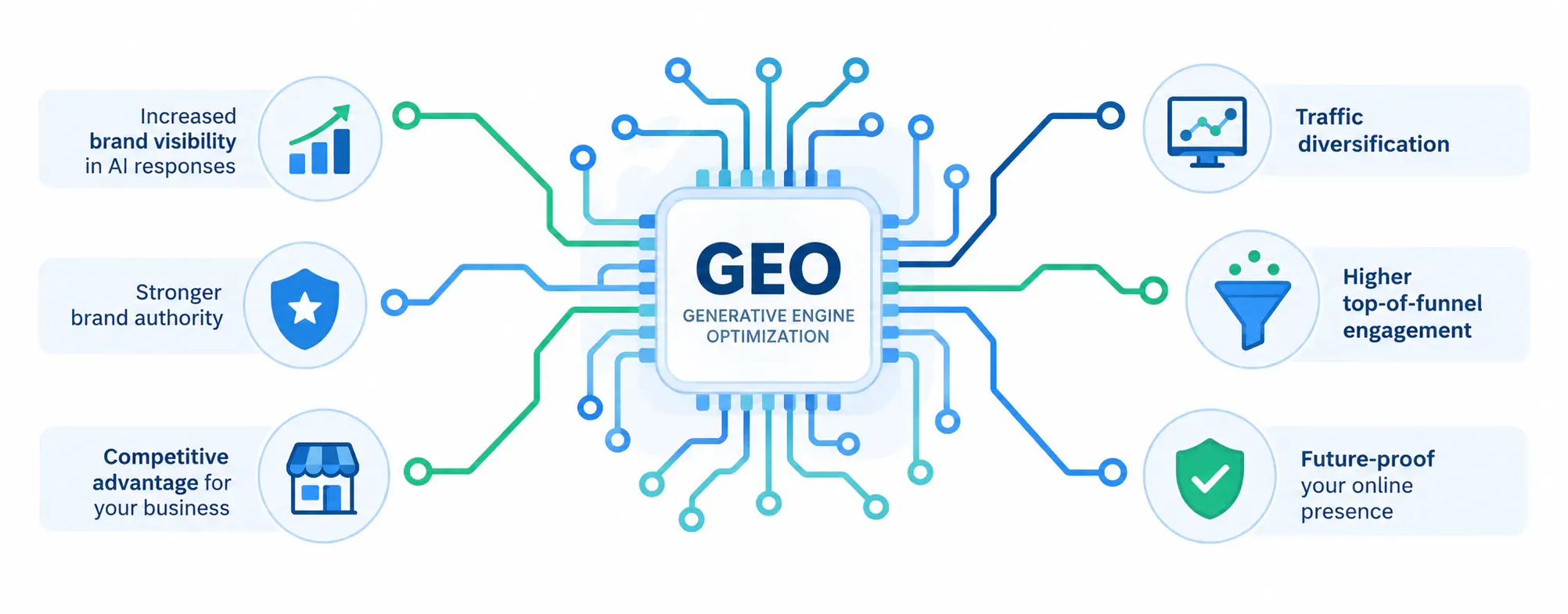
How to Build a Website for SEO, AIO, AEO, and GEO
The biggest mistake businesses can make is treating SEO, AIO, AEO, and GEO as four completely separate marketing projects.
They are better understood as connected layers of one digital presence.
1. Build a logical website architecture
The structure of a website should reflect how customers understand the business.
For example, a technology company could organize its website around:
Services → Solutions → Industries → Resources → Company
Each important service should have its own dedicated page rather than being hidden within a general paragraph on the homepage.
A clear hierarchy helps visitors navigate the website while also giving search systems more context about the relationships between different pages and topics.
2. Create content around customer questions
AI optimization does not mean writing content for machines.
The best starting point is still the customer.
A strong service page should explain not only what a company offers, but also why customers may need it, how the service works, what problems it solves, what the process involves, and what factors influence the decision.
This approach naturally produces content that is useful for people while also making important business information easier for search and AI systems to interpret.
3. Make technical foundations part of development
Search visibility depends partly on the technical quality of the website.
Businesses should consider factors such as:
- Mobile-friendly design
- Fast page performance
- Crawlable and indexable pages
- Clear URLs and page hierarchy
- Descriptive headings and metadata
- Logical internal linking
- Structured and accessible content
- Scalable architecture for future pages and resources
Addressing these elements during development is generally more efficient than trying to rebuild the technical foundation after a website has already launched.
4. Demonstrate expertise and credibility
Modern search is increasingly about more than matching keywords.
Search engines and AI systems need to understand whether a business is a credible source of information.
Companies can strengthen this foundation by publishing useful expert content, developing industry-specific resources, maintaining consistent company information, and clearly communicating their experience and capabilities.
The goal is to build a reliable body of information around the business and its expertise, supported by a website that drives trust, usability, and conversion.
FIX Partner: Building Websites for Modern Search
For businesses adapting to AI-driven search, website development should be considered part of a broader digital strategy. While the website provides the technical foundation, businesses may also need complementary digital marketing and SEO services to strengthen their search visibility, content performance, and brand presence across search channels.
FIX Partner develops business websites with modern search requirements in mind. Beyond visual design and functionality, the development process can incorporate technical and structural considerations that support SEO, AIO, AEO, and GEO.
This can include:
- Search-friendly architecture that organizes services, solutions, industries, and resources logically.
- SEO-friendly page structures with appropriate headings, URLs, metadata, and content organization.
- Mobile and performance optimization to support a better user experience.
- Crawlability and indexability so important pages can be discovered and processed effectively.
- Dedicated service and solution pages that provide deeper context about the company's capabilities.
- FAQ and question-based content structures that address real customer needs.
- Internal linking opportunities that connect related pages and topics.
- Scalable website architecture that allows businesses to continue adding content, landing pages, and resources as their needs evolve.
The goal is not to guarantee a position in an AI-generated answer. Instead, it is to create a website that is clear, accessible, technically sound, informative, and scalable, giving businesses a stronger foundation as search behavior continues to evolve.
One Website Foundation for a Changing Search Landscape
Businesses do not need separate websites for SEO, AIO, AEO, and GEO.
A better approach is to build one strong digital foundation that can support different search experiences.
- SEO helps businesses build visibility in traditional organic search.
- AIO introduces opportunities to be represented within AI-generated search summaries.
- AEO focuses on making useful information clear and answer-ready.
- GEO considers broader visibility across generative AI search experiences.
These areas overlap because they all depend on many of the same fundamentals: strong technical architecture, useful content, clear business information, credible expertise, and a good user experience.
Conclusion: Build for the Search Experience Ahead
Search is moving beyond traditional keyword searches and lists of links. People increasingly expect direct answers, summaries, comparisons, and recommendations from search engines and AI-powered platforms.
This does not make SEO less important. It expands the definition of search visibility.
For businesses, the goal is to build a digital presence that is discoverable, understandable, credible, and useful across different search environments. That is why SEO, AIO, AEO, and GEO should be considered during website development, not added after launch.
FIX Partner helps businesses build websites with technical and content foundations for both traditional search and emerging AI-driven experiences.
Ready to build a search-ready website? Talk to FIX Partner today.