php2shell: Critical PHP Flaws Put Businesses at Risk
Learn how php2shell vulnerabilities could threaten PHP-powered businesses and discover practical steps to reduce security risks and improve software reliability.
On this page
The global cybersecurity community faces renewed concerns after reports of two critical PHP vulnerabilities known as php2shell. Identified as CVE-2026-109618 and CVE-2026-109619, these flaws could let attackers execute malicious code remotely on vulnerable servers without authentication. With emergency security updates reportedly released on October 21, 2026, organizations using affected PHP versions need to assess their exposure and strengthen their defenses.
PHP powers a significant portion of the internet, supporting corporate websites, e-commerce platforms, content management systems, and business applications. A vulnerability affecting this widely used technology can therefore have consequences far beyond the IT department. For businesses, the risks include data exposure, service disruption, financial losses, and damage to customer trust.
The php2shell incident highlights an essential lesson: cybersecurity is not simply a technical responsibility. It is a business continuity issue that requires timely decisions, coordinated action, and long-term investment in reliable digital infrastructure.
Understanding php2shell and Its Security Risks
The php2shell vulnerabilities raise concerns because they affect PHP's underlying memory management mechanisms. Understanding their potential impact helps business leaders recognize why rapid assessment and remediation are essential.
What Makes php2shell So Dangerous?
According to the supplied reports, the two vulnerabilities involve improper memory handling, including reading uninitialized data under certain out-of-memory conditions and reusing memory after it has been released, a problem known as use-after-free.
These weaknesses could potentially enable remote code execution (RCE). In simple terms, this means an attacker may be able to make a vulnerable server execute unauthorized commands by sending specially crafted requests.
The reported CVSS v4.0 severity score of 9.2 out of 10 places the vulnerabilities in the critical category. The absence of an authentication requirement in the described attack scenario makes them particularly concerning because attackers may not need legitimate user credentials to attempt exploitation.
However, the existence of php2shell does not automatically mean every PHP-powered website is vulnerable or compromised. Actual exposure depends on the affected versions, system configuration, and whether the appropriate security updates have been applied.
How Could php2shell Affect Your Business?
A compromised web server can expose more than the website visitors see. Depending on its permissions and connections to other systems, an attacker may gain access to sensitive information, disrupt application operations, or use the compromised environment as a starting point for further attacks.
For e-commerce businesses, this could mean interrupted transactions, service downtime, or risks to customer information. Professional services firms may face inaccessible client portals, operational delays, and expensive recovery efforts. Companies that depend on digital subscriptions, bookings, or customer support could also lose revenue if their services become unavailable.
Beyond immediate financial losses, a security incident can weaken customer confidence and create reputational damage that takes months or years to repair. Businesses should therefore treat php2shell as a potential operational risk, not merely a technical issue for developers to resolve.
Emergency Patches and the Global Response
When a critical vulnerability becomes public, the time available for organizations to respond can shrink quickly. Businesses need a clear process for assessing affected systems, applying fixes, and maintaining essential services without introducing unnecessary operational risks.
Why Security Teams Must Act Quickly
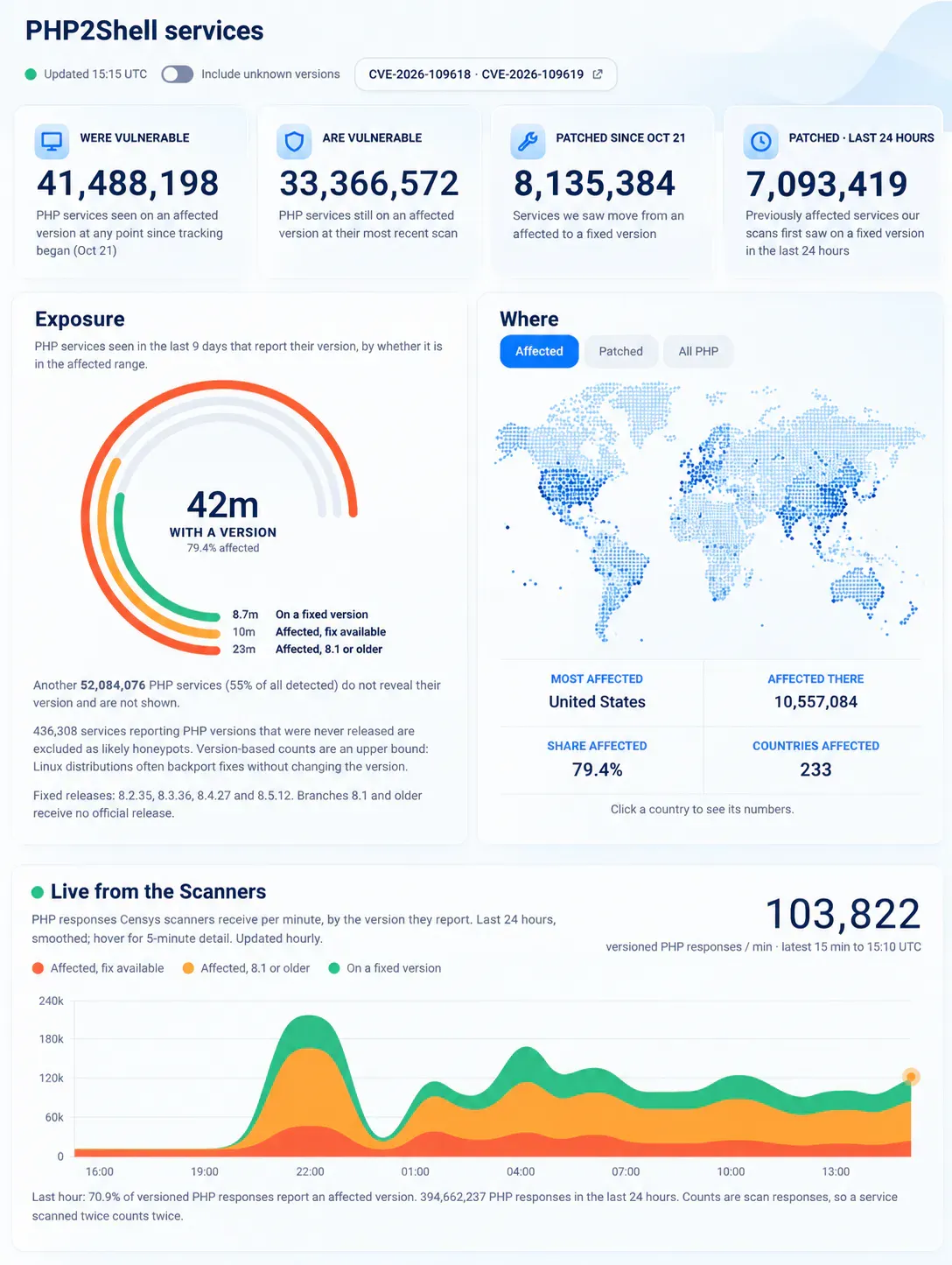
The reported emergency updates include PHP 8.5.12, 8.4.27, 8.3.36, and 8.2.35. Organizations should consult the official PHP security advisories to confirm the affected branches and identify the correct fixed release for their environments.
Once vulnerability details or proof-of-concept code become publicly available, attackers may analyze the information to develop exploitation techniques or identify systems that remain unpatched. This can increase pressure on businesses to respond before their exposure becomes an incident.
A practical response begins with identifying affected applications and coordinating with hosting providers and infrastructure teams. Organizations should prioritize systems exposed to the internet, assess the availability of security updates, and test fixes against essential business functions before deployment whenever feasible.
Patching alone, however, may not be sufficient if a system has already been compromised. Reviewing logs, investigating suspicious activity, and checking for unauthorized changes are important parts of the response.
What the Japanese Response Means for Businesses
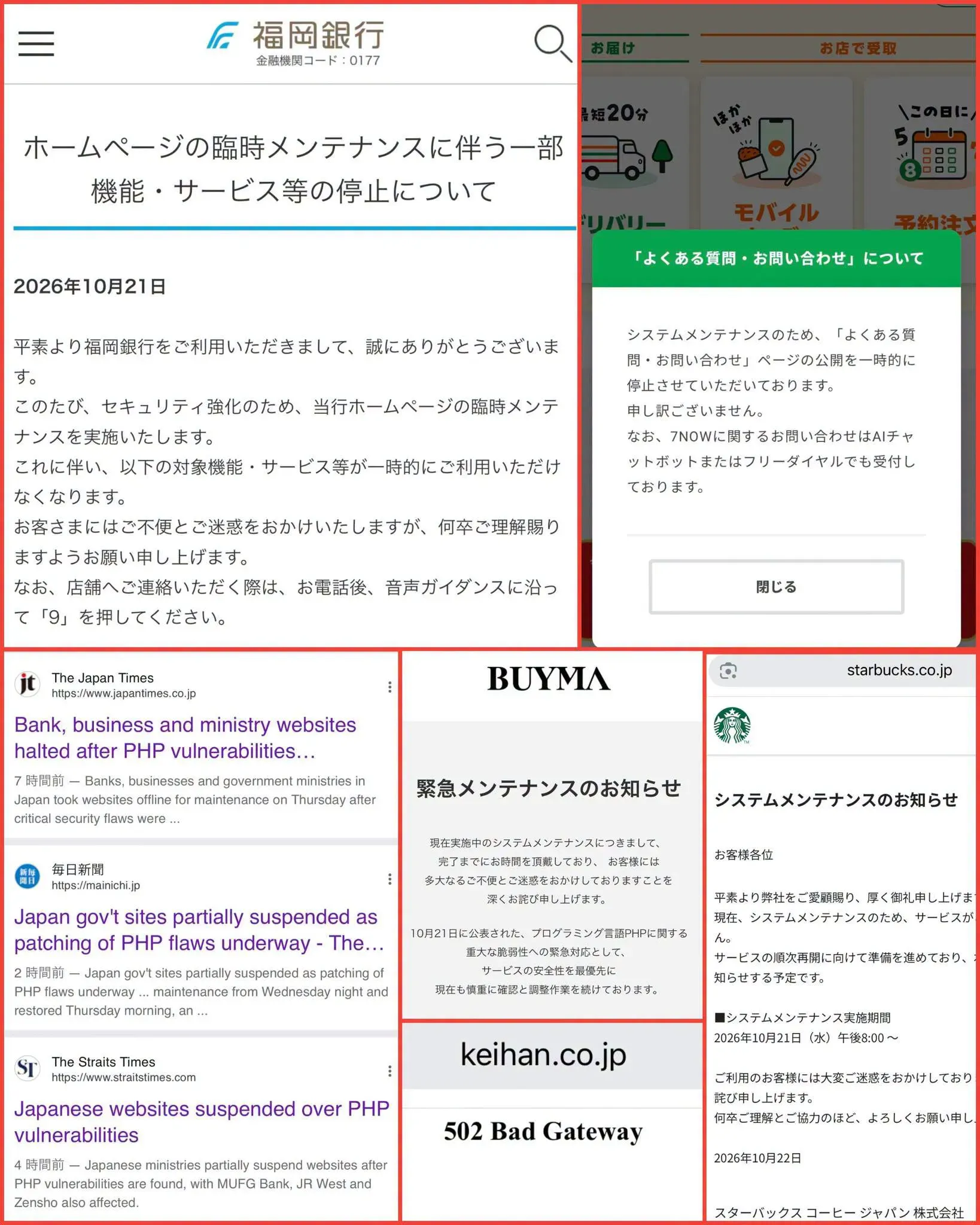
Reports surrounding php2shell have highlighted heightened cybersecurity alerts and precautionary service suspensions in Japan. Such measures illustrate the difficult decisions organizations may face when a critical vulnerability threatens systems supporting essential services.
Temporarily shutting down an affected service may reduce exposure when no effective immediate fix is available. However, doing so can also interrupt transactions, delay customer services, and affect revenue.
The appropriate response depends on verified security guidance, the sensitivity of the affected systems, and the availability of effective remediation. Businesses should establish clear escalation procedures so technical teams and decision-makers can quickly determine whether to patch, isolate, restrict access to, or temporarily suspend a service.
The broader lesson is that effective incident management starts before a crisis. Organizations need defined responsibilities, reliable communication channels, tested backups, and a practical business continuity plan.
Legacy PHP Systems Create Long-Term Challenges
The php2shell incident also highlights a persistent problem: many businesses continue to depend on outdated software that no longer receives regular security updates. These systems can become increasingly difficult to protect as new vulnerabilities emerge.
Why Outdated Infrastructure Increases Exposure
Older PHP releases, including PHP 5 and PHP 7 branches, may remain in production because organizations depend on legacy applications that are costly or difficult to modernize. Even PHP 8.0 and 8.1 have reached the end of their official support periods.
The reasons are often organizational rather than purely technical. Businesses may delay upgrades because of compatibility concerns, limited budgets, insufficient documentation, or fears that changes will disrupt critical operations.
However, unsupported software may not receive the security fixes needed to address newly discovered vulnerabilities. This can leave businesses dependent on temporary workarounds or specialist extended-support arrangements while they plan a more sustainable solution.
A strong modernization strategy begins with an accurate inventory of applications, PHP versions, hosting environments, and third-party dependencies. Businesses should prioritize upgrades based on exposure, business importance, and the availability of supported alternatives.
Practical Steps to Reduce php2shell Risks
Businesses can take several practical steps to reduce their exposure and improve their cybersecurity readiness.
- Identify affected systems. Work with IT teams and hosting providers to determine which websites, applications, servers, and containers use affected PHP versions.
- Apply the appropriate security updates. Upgrade to a supported, fixed release that is compatible with the application. Validate critical functions and avoid unnecessary delays when exposure is confirmed.
- Review legacy infrastructure. Develop a migration or upgrade plan for unsupported PHP versions. If immediate migration is impossible, evaluate temporary safeguards with qualified security professionals.
- Investigate potential compromise. Review server logs, monitoring alerts, unexpected file changes, and suspicious activity. Patching does not automatically remove an attacker who may already have gained access.
- Strengthen incident response. Maintain tested backups, establish escalation procedures, and clarify responsibilities for technical remediation, customer communication, and business continuity.
Temporary configuration changes may sometimes reduce exposure, but they should not be treated as a permanent solution unless supported by authoritative security guidance. Applying the appropriate vendor-provided fixes remains central to effective vulnerability management.
How FIX Partner Helps Businesses Improve Software Quality
Addressing vulnerabilities such as php2shell requires proactive security measures and reliable software testing. FIX Partner helps businesses improve application quality and reliability through software testing services, including mobile automation testing.
Improving Application Reliability Through Testing
Security patches and infrastructure upgrades can sometimes affect existing application functionality. Automated testing helps teams validate critical features, detect defects, and reduce regression risks after software changes.
While testing does not replace vulnerability assessments or security patching, it complements these measures by helping businesses maintain stable applications and more reliable release processes.
Supporting Sustainable Digital Growth
FIX Partner helps businesses strengthen software quality through tailored testing solutions that support more efficient development and dependable digital experiences. By integrating testing into software workflows, organizations can manage changes more confidently and reduce avoidable disruptions.
Ready to improve your software quality?
Contact FIX Partner to explore testing solutions tailored to your business needs.
Written by
Hannah Huynh
Published by
FIX Partner
FIX Partner helps organizations design, build, test, and modernize software products with engineering, AI, data, and QA expertise.
About FIX Partner →Ask FIX Partner
Have a question about this topic?
Leave your details and a short note. Our team can help you identify a practical next step.
Related articles

AI Transparency Obligations: What Businesses Must Know
Hannah HuynhJul 22, 2026
Learn how AI transparency obligations under the EU AI Act affect businesses and discover practical steps to build compliant, trustworthy AI solutions.
Read more →
PHP Migration to Modern Programming Languages
Hannah HuynhOct 22, 20267 min read
Explore PHP migration to modern programming languages, compare alternatives, reduce risks, and build a secure, maintainable application for long-term business growth.
Read more →
AI Agent Systems: How Business Software Is Evolving
Hannah HuynhSep 26, 2026
Explore AI agent systems and how they transform business software through intelligent automation, dynamic decision-making, software development, and workflow orchestration.
Read more →