Mobile Development: Trends, Tools, and Best Practices
Explore key mobile development trends, essential tools, and best practices to build secure, scalable, and user-friendly mobile applications.
On this page
Mobile development has become the cornerstone of innovation in today’s fast-paced digital world, reshaping how we interact with technology and transforming user experiences. Mobile apps are the driving force behind these advancements, from the convenience of shopping online to the efficiency of managing businesses on the go. Staying updated with emerging trends, tools, and best practices in mobile development is essential for developers, businesses, and tech enthusiasts alike.
This article explores the latest trends in mobile development, tools that empower developers, and best practices for building innovative apps that stand out in a competitive market.
Trends Shaping Mobile Development
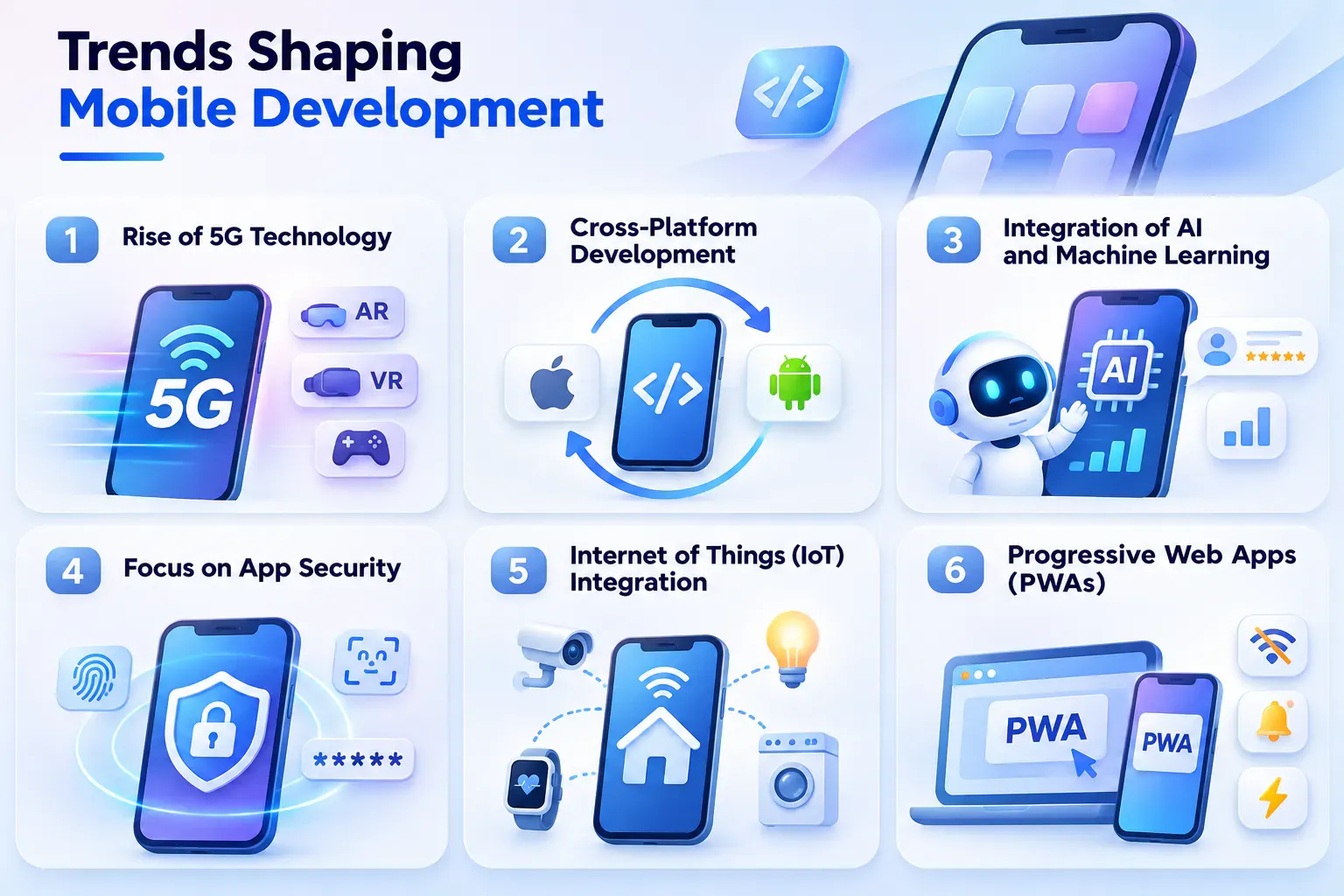
1. Rise of 5G Technology
The rollout of 5G technology has revolutionized mobile app performance. With its ultra-fast speeds and low latency, 5G enables developers to create more dynamic and data-intensive applications. Features like augmented reality (AR), virtual reality (VR), and real-time gaming are now more accessible and seamless, enhancing user experiences.
2. Cross-Platform Development
Gone are the days when developers had to create separate apps for iOS and Android. Cross-platform development frameworks like Flutter and React Native allow building apps running smoothly across multiple platforms. This approach saves time and resources and ensures a consistent user experience.
3. Integration of AI and Machine Learning
Artificial intelligence (AI) and machine learning (ML) are no longer optional but necessary components of modern mobile apps. From personalized recommendations to advanced chatbots, AI-powered features enhance user engagement and functionality. Developers are leveraging AI to analyze user behavior and provide tailored experiences.
4. Focus on App Security
As cyber threats become more sophisticated, app security has taken center stage. Users are increasingly concerned about data privacy, making end-to-end encryption, biometric authentication, and secure APIs essential in mobile app development.
5. Internet of Things (IoT) Integration
IoT-connected devices are becoming ubiquitous, and mobile apps are the central hub for controlling them. Smart home devices, wearable technology, and industrial IoT applications rely on intuitive mobile interfaces, driving developers to focus on seamless integration and user-friendly designs.
6. Progressive Web Apps (PWAs)
PWAs bridge the gap between web and mobile apps, offering a native app-like experience directly from a web browser. With features like offline access, push notifications, and fast loading times, PWAs are gaining traction among businesses aiming to reach a wider audience without investing in native app development.
Tools Empowering Mobile Developers
1. Flutter
Flutter, an open-source UI toolkit by Google, has gained immense popularity because of its ability to create visually stunning apps for both iOS and Android using a single codebase. With its hot reload feature, developers can see changes in real-time, speeding up the development process.
2. React Native
Powered by Facebook, React Native is another leading framework for cross-platform development. Its reusable components and vast library ecosystem make it a favorite among developers for creating efficient and scalable mobile applications.
3. Xcode and Android Studio
For developers focusing on native apps, Xcode (for iOS) and Android Studio (for Android) remain the go-to IDEs. These tools provide robust debugging, testing, and deployment capabilities, ensuring high-quality app development.
4. Firebase
Firebase, a platform by Google, offers a comprehensive suite of tools for app development, including real-time databases, analytics, crash reporting, and cloud messaging. It simplifies backend development, allowing developers to focus on building great user experiences.
5. Kotlin and Swift
Kotlin (for Android) and Swift (for iOS) are modern programming languages designed for mobile app development. Their concise syntax, safety features, and high performance make them essential tools for creating reliable and efficient native apps.
Best Practices for Building Innovative Apps
1. Prioritize User-Centric Design
A mobile app’s success hinges on its usability. Understanding user needs, preferences, and pain points is crucial for creating an app that delivers value. Conduct thorough user research, create intuitive navigation, and ensure the app’s design is both aesthetically pleasing and functional.
2. Optimize for Performance
Performance is a critical factor in user retention. Apps that lag or crash are quickly abandoned. To ensure optimal performance:
- Minimize app load times.
- Optimize images and assets.
- Use efficient coding practices.
- Test the app on multiple devices and network conditions.
3. Embrace Agile Development
Agile methodologies foster collaboration, flexibility, and iterative improvements. Regular updates and feedback loops ensure the app evolves with user expectations and market trends.
4. Implement Robust Testing
Testing is non-negotiable in mobile development. Automated testing tools like Appium and TestComplete, along with manual testing, help identify and fix bugs before deployment. Test the app’s functionality, security, performance, and compatibility thoroughly.
5. Ensure Scalability
As your user base grows, the app should be able to handle increased traffic and data. Build scalable architectures and leverage cloud services to accommodate future growth without compromising performance.
6. Focus on Accessibility
Accessibility ensures that your app is usable by everyone, including individuals with disabilities. Incorporate features like screen readers, high-contrast modes, and voice commands to make your app inclusive.
7. Stay Updated with Industry Trends
Mobile development is a dynamic field. Keep abreast of emerging technologies, user expectations, and market demands. Attending industry events, following thought leaders, and participating in developer communities can help you stay ahead of the curve.
Case Study: Success Through Innovation
Spotify demonstrates how mobile apps can use artificial intelligence (AI) and machine learning (ML) to create more personalized user experiences. One notable example is Discover Weekly, a feature that generates a personalized playlist for each listener based on their listening history, music preferences, and patterns across the Spotify community.
According to Spotify Engineering, the feature combines recommendation algorithms with human curation to help users discover music they may enjoy. Spotify has also explained how machine learning models personalize content on its Home screen by selecting and ranking music and podcasts based on individual listener preferences.
This example highlights several important mobile development practices: using data to understand user behavior, applying AI to improve personalization, and continuously refining app experiences. It also demonstrates how thoughtful technology implementation can make an app more engaging and valuable to its users.
FIX Partner: Supporting Your Mobile Development Journey
Building a successful mobile application requires the right technology, development expertise, and a strong focus on quality. FIX Partner supports businesses in turning their digital ideas into reliable, user-friendly mobile solutions.
Key advantages of working with FIX Partner include:
- Mobile Application Development: Supporting businesses in building mobile applications aligned with their goals, target audiences, and technical requirements.
- Mobile Automation Testing: Helping improve app quality through automated testing, faster feedback, and more efficient testing processes.
- Cross-Platform Expertise: Supporting development approaches that help businesses reach users across multiple mobile platforms.
- Quality-Focused Delivery: Identifying potential issues and improving application reliability, functionality, and user experience.
- Success Fulfillment: Going beyond project delivery to help clients achieve their goals and realize their potential for lasting fulfillment and satisfaction.
Whether you are launching a new mobile app or improving an existing product, FIX Partner can support your journey from development to quality assurance.
Conclusion
Mobile development continues to unlock new possibilities, transforming how we interact with technology and each other. By staying updated with trends like 5G, AI integration, cross-platform development, and adhering to best practices such as user-centric design and robust testing, developers can create innovative apps that deliver exceptional user experiences.
As the landscape of mobile technology evolves, embracing these strategies will keep you competitive and ensure your apps make a lasting impact in the digital age. The future of mobile development is bright, and the opportunities are limitless; start building today!
Written by
Hannah Huynh
Published by
FIX Partner
FIX Partner helps organizations design, build, test, and modernize software products with engineering, AI, data, and QA expertise.
About FIX Partner →Ask FIX Partner
Have a question about this topic?
Leave your details and a short note. Our team can help you identify a practical next step.
Related articles

IoT Mobile App Development Services: Business Impact
Hannah HuynhAug 23, 2026
Discover how IoT mobile app development services help businesses connect devices, improve customer experiences, automate operations, and drive growth.
Read more →
Warehouse Management Software Benefits for Efficiency
Hannah HuynhNov 13, 20268 min read
Discover warehouse management software benefits beyond daily operations, including better business decisions, risk management, scalability, and growth.
Read more →
AI Agent Systems: How Business Software Is Evolving
Hannah HuynhSep 26, 202610 min read
Explore AI agent systems and how they transform business software through intelligent automation, dynamic decision-making, software development, and workflow orchestration.
Read more →